

Opening the tear duct with DCR
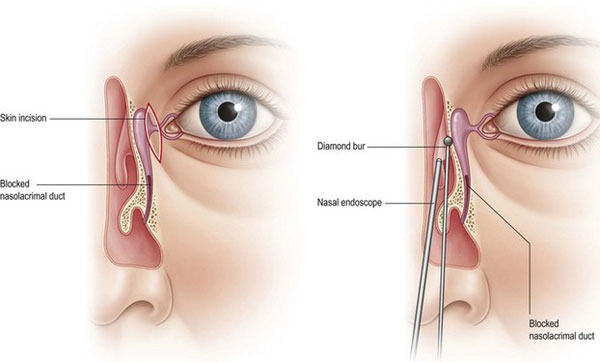
In order for our eyes to function optimally, the surface of the eye must always remain smooth and polished. Eye tears are responsible for this task and protect this important member about dust and pollution, and on the other hand, improve its function. In some people, the secretion of eye tears is difficult for the reasons we will mention. For example, in patients with the natural path of removing tears from the eye to the nose, it is very annoying and it is necessary to treat the disease with Dacriocysto Rhinostomy or DCR surgery.
In the eye DCR surgery, by creating a bone channel in the inner corner of the eye to the nose, it creates a new tear channel from which tears flow to the nose. Eye DCR surgery is performed in two ways:
1- The external method in external DCR eye surgery, first incision of one to two centimeters in the inner corner of the eye and on the outer wall of the nose is made to the tear bone to allow access to the dricossitunostomemia or tear duct.
Eye DCR surgery is performed by an eye specialist and preferably a plastic and repair eye specialist. In some patients, in order to maintain the survival of this new canal, it is necessary to place the silicone tube, from the tear holes of both the eyelids (pancetums) to the nose. The knot of this ring is in the nose. The tube is removed in the clinic after one or more months.
2- Through the nose, in this method of dCR eye surgery through the nose, a device called nasal endoscopy is used and there is no need for skin incision, and therefore the surgical site (scar) does not remain. Some patients choose this method due to the lack of surgical staff.
In this method, Endonoscopy Endonasal DCR, both plastic and reconstructive surgeons and nose surgeons operate jointly and in the form of teamwork.
One of the advantages of this surgical method, in addition to the lack of surgery on the patient’s skin, is that the patient is relieved of the problems inside his nose at the same time in surgery and hospitalization, and the surgery is possible.
The success of this surgical procedure is more than 95%. DCR endocscopic surgery, for the first time in Iran, was performed in the subspecialty clinic of Farabi branch of Motahari branch, and so far more than 800 Endo DCR surgeries have been successfully performed in this clinic with more than 95%.