

Septoplasty Surgery
What is septoplasty?
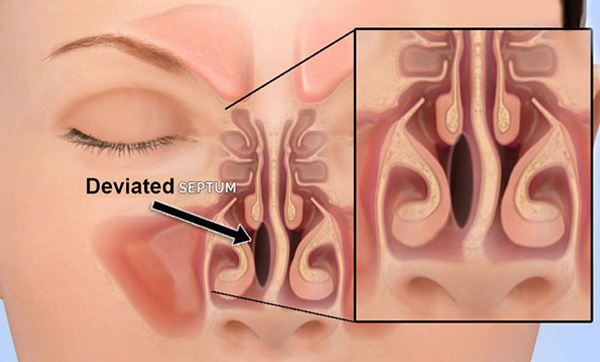
Septoplasty is surgery inside your nose to straighten a deviated septum. Your septum, about 7 centimeters long (2.5 to 3 inches) in adults, consists of cartilage and bone. It separates the inside of your nose into two chambers, or nostrils.
If your septum is deviated (crooked or bent), it can block one or both nostrils and interfere with airflow. A crooked septum can happen because of an injury, or you can be born with it. When this happens, you may need a septoplasty. Healthcare providers may also recommend septoplasty to:
- Remove nasal polyps
- Treat chronic sinusitis or obstructive sleep apnea
- Stop recurrent nosebleeds (less common)
- Address other conditions that block your nasal airway
Septoplasty is one of the most common procedures performed by otolaryngologists (ear, nose and throat doctors, or ENTs). It’s a minor, outpatient surgery. This means you’ll likely get to go home the day of your procedure.
Treatment Details
How should I prepare for septoplasty?
Before surgery, your healthcare provider will review your medical history. This includes asking about any medications or supplements you’re taking.
They’ll let you know what medicines to stop taking before surgery. Some, like aspirin, ibuprofen and naproxen, may increase your bleeding risk. They’ll also let you know when to stop eating or drinking before surgery.
What happens during septoplasty?
Typically, a healthcare provider called an anesthesiologist will place you under general anesthesia. This means you’ll be asleep during surgery. Local anesthesia, which numbs your nose, may be an option.
Your surgeon will create an incision (cut) on one side of your nose. They’ll lift the thin membrane (mucosa) that covers and protects your septum. Then, they’ll reshape your septum’s bone and cartilage.
Sometimes, surgeons perform another procedure called a turbinate reduction alongside septoplasty. If this is the case, they’ll remove parts of the bone and cartilage that are slowing airflow through your nasal passages.
Afterward, they’ll reposition the mucosa over your septum. They’ll insert splints or soft packing inside your nose. This material holds nasal tissue in place, prevents nosebleeds and reduces the risk of scar tissue. Or your surgeon may sew tissue back together using dissolving stitches. They’ll disappear on their own in time.